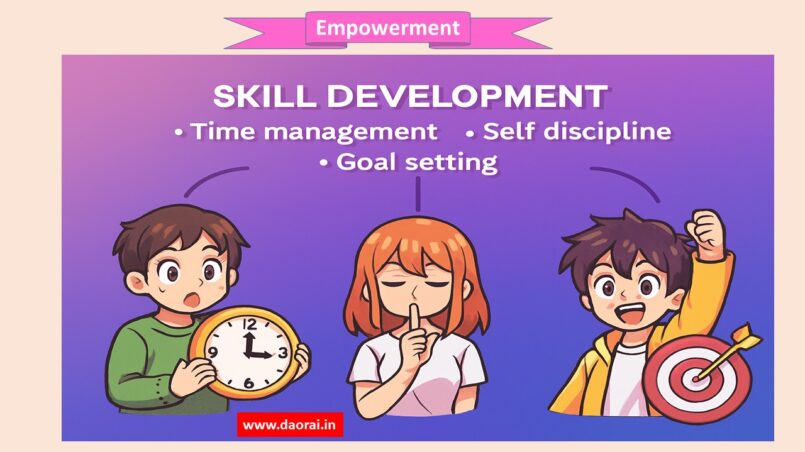
When we think about skill development, most of us imagine learning new software, mastering a foreign language, or acquiring technical expertise to enhance our resumes. But genuine skill development begins much deeper, it starts with you. The greatest skills you can ever develop are not just professional; they are personal. They are the abilities to manage your time wisely, discipline yourself daily, and set meaningful goals that give direction to your life.
For students and fresh graduates, life can feel like a whirlwind of expectations like exams, internships, job searches, social commitments, and self-doubt. In such moments, it’s easy to feel lost, unsure of what to prioritize or how to stay consistent. But amid this chaos lies an incredible opportunity: to learn how to master yourself. Because once you do that, no challenge academic, professional, or personal will be too big to handle.
Skill development is not a single milestone; it’s a lifelong process of growth. And this journey begins with three fundamental pillars time management, self-discipline, and goal setting. Master these, and you’ll hold the key to building every other skill you’ll ever need.
Goal Setting → Self-Discipline → Time Management
1. Goal Setting: Your Compass in a Noisy World
In today’s fast-paced digital world, it’s easy to confuse activity with achievement. You can be busy all day attending lectures, sending applications, multitasking yet feel like you’re not moving forward. That’s where goal setting becomes essential. Goals act as your compass, keeping you focused amid endless distractions and helping you measure your true progress.
But not all goals are created equal. Many people set vague goals like “I want to be successful” or “I want to improve my skills.” These statements are inspiring but lack direction. To create real change, your goals must be specific, measurable, and personal. Instead of saying, “I want to get better grades,” say, “I will review my notes for 30 minutes every evening and solve one past paper per week.” That’s a goal you can track and commit to.
Define why you want to achieve each goal. Your “why” gives your goal meaning and fuels perseverance when obstacles arise. For instance, wanting to improve your communication skills might stem from your desire to become a confident leader that deeper purpose will keep you going when the journey gets challenging.
Finally, review your goals regularly. Life changes, and so will your priorities. Reflect every month or quarter to see what’s working and what needs adjustment. Setting goals is not about predicting the future, it’s about designing it consciously, one decision at a time.
Steps to set powerful goals:
- Define your ‘why’: Why does this goal matter to you? A strong reason fuels persistence.
- Be specific: “I want to get better grades” becomes “I’ll study two extra hours daily for my core subjects.”
- Set timelines: Deadlines create focus. A goal without a deadline is just a wish.
- Review and adjust: Life changes, and so do priorities. Reflect monthly on what’s working and what isn’t.
When your goals are clear, decisions become easier. You stop chasing distractions and start building direction.
2. Self-Discipline: The Bridge Between Goals and Achievement
If time management is about planning, then self-discipline is about execution. It is the invisible force that turns intentions into actions, dreams into reality. You can have the best goals and the most detailed plans, but without discipline, they’re just ideas on paper.
Self-discipline is often misunderstood as being rigid or boring, but in reality, it’s the ultimate form of freedom. When you build discipline, you’re no longer controlled by impulses or distractions. You gain the power to choose long-term success over short-term comfort. For example, choosing to study an extra hour instead of scrolling through social media, or sticking to a workout routine even when you don’t feel motivated those small decisions define your future more than any big moment ever will.
To build discipline, start by creating simple routines that reinforce consistency. You don’t need to overhaul your life overnight; begin small. Wake up 15 minutes earlier. Read 10 pages of a book daily. Write your thoughts in a journal for five minutes before bed. These small acts train your mind to follow through, even when motivation fades. And it will fade because motivation is a spark, but discipline is the fire that keeps you going when things get tough.
Celebrate progress, no matter how small. Every time you resist distraction, finish what you started, or choose effort over comfort, you strengthen your inner willpower. Over a time, self-discipline stops feeling like a struggle it becomes your second nature.
How to build it:
- Create routines, not restrictions: A disciplined life isn’t boring it’s freeing. When your habits guide your actions, you save mental energy for creativity and growth.
- Start small: Consistency matters more than intensity. Reading 10 pages daily is better than reading 100 pages once a month.
- Reward progress: Celebrate small wins to stay motivated and reinforce good habits.
Discipline is a skill and like any skill, it strengthens with practice. Each time you choose consistency over comfort, you’re training your future self to be stronger.
3. Time Management: Turning Hours into Opportunities
Time is often called the greatest equalizer because no matter who we are student or CEO, rich or poor, we all get the same 24 hours in a day. The difference lies in how we use those hours. Time management isn’t about squeezing every minute with endless work or burning yourself out with unrealistic productivity goals. It’s about learning to direct your energy toward what truly matters.
As a student or graduate, you’re constantly juggling assignments, projects, job applications, and maybe even part-time work. The truth is, you will never “find time” you have to make it. That means taking control of your schedule instead of letting it control you. Start each day with clarity: know what needs your attention and what can wait.
Try applying the 80/20 rule, also known as the Pareto Principle: 80% of your results often come from just 20% of your activities. Identify those few tasks that bring real progress like focused study sessions, skill-building, or networking and give them priority. Planning your day the night before can also be a game-changer. When you wake up with a clear roadmap, you eliminate the morning confusion that often leads to procrastination.
Time management is not about being busy it’s about being effective. Every minute you spend purposefully compounds over time, turning small, consistent efforts into powerful results. Remember: you don’t lose time; you spend it. So spend it wisely.
Practical Tips:
- Use the 80/20 rule: Identify the 20% of tasks that yield 80% of your results. Prioritize them.
- Plan your day the night before: A 10-minute evening review can save hours the next day.
- Break big goals into small tasks: Avoid procrastination by focusing on one manageable action at a time.
Remember: You don’t find time; you make time for what matters most. Each hour spent with intention is a brick in the foundation of your future.
4. Connecting the Dots: Building the Foundation for Lifelong Growth
The beauty of these three skills time management, self-discipline, and goal setting, all lies in how they strengthen one another. When you have clear goals, it’s easier to manage your time effectively because you know what matters most. When you manage your time well, you create space for discipline to flourish. And when discipline becomes a habit, achieving goals becomes natural.
This cycle of growth creates momentum a positive loop that keeps you improving, no matter where you are in life. Once you’ve developed these core habits, learning any other skill whether technical or creative becomes more easier because you already possess the mindset and structure for mastery.
Conclusion
At the end of the day, your degree may open doors, but your personal skills will decide how far you go once you step through them. The real world rewards those who can learn, adapt, and persevere and those qualities are built through consistent effort in managing your time, disciplining your mind, and setting meaningful goals.
Remember, your future is not shaped by grand achievements but by small daily choices. Every morning you wake up early to study, every hour you dedicate to improving yourself, every plan you follow through you’re building the foundation of a stronger, wiser version of yourself.
So, don’t wait for the perfect moment to begin. The perfect moment is now. Start where you are, use what you have, and do what you can. As you grow in discipline, clarity, and focus, you’ll realize that skill development isn’t just about getting better at something it’s about becoming someone better.
The journey of mastering the world begins with mastering yourself. And once you do that, no dream will ever be out of reach.